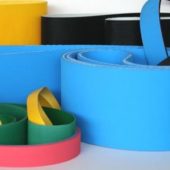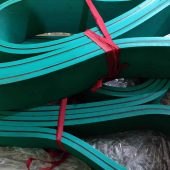
In the packaging and printing industry, feeder belts play an important role in the smooth and accurate movement of paperboard, cartons, corrugated sheets, and other packaging materials through folder gluer machines.
Also known as folder gluer belts, folder glue belts, feeder conveyor belts, or pink color folder glue belts, these belts are designed to provide consistent grip, stable feeding, and reliable material transportation during high-speed folding and gluing operations.
A high-quality feeder belt can make a significant difference in machine performance. The right belt helps reduce slipping, feeding errors, material damage, downtime, and unnecessary maintenance.
What Are Feeder Belts?
Feeder belts are industrial conveyor belts used in folder gluer and carton folding machines to transport sheets continuously through different sections of the machine.
During the folder-gluer process, the belt needs to maintain consistent contact with the sheet while the material is being:
- Fed into the machine
- Aligned and positioned
- Folded
- Glued
- Compressed
- Transferred between sections
- Delivered to the final collection area
Because folder gluer machines often operate at high speeds, the feeder belt must provide reliable traction and dimensional stability.
What Are Pink Folder Glue Belts?
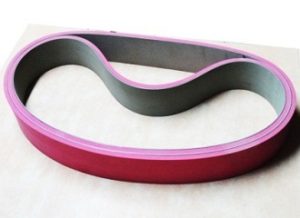
Pink folder glue belts are commonly used as feeder and conveying belts in folder-gluer applications. Their distinctive pink-colored surface makes them easily recognizable in many packaging machinery applications.
These belts are selected for applications where a combination of grip, flexibility, wear resistance, and smooth sheet transportation is required.
Depending on the machine and application, pink feeder belts can be used for different stages of carton and paperboard processing.
Applications of Folder Gluer Feeder Belts
Feeder belts are widely used in packaging machinery, particularly in the production of folding cartons and paperboard packaging.
Typical applications include:
1. Carton Folding Machines
Folder gluer belts help transport cartons accurately through folding sections while maintaining continuous contact with the material.
2. Folder Gluer Machines
In folder-gluer machines, belts are used throughout feeding, folding, gluing, conveying, and delivery sections.
3. Packaging Machinery
Feeder belts are suitable for machinery handling paperboard cartons, packaging blanks, printed sheets, and similar materials.
4. Printing and Paper Converting
Specialized feeder belts are also used in paper handling and converting equipment where controlled movement of sheets is required.
5. High-Speed Carton Production
For high-volume production environments, consistent belt performance is particularly important because even small feeding problems can result in significant production losses.

Key Features of High-Quality Feeder Belts
When choosing a feeder belt for a folder gluer machine, several characteristics should be considered.
Excellent Grip
The belt should provide sufficient traction to move sheets without excessive slipping.
Good Flexibility
Folder-gluer machines contain multiple rollers and bends. A flexible belt can move smoothly around the machine’s conveying system.
Wear Resistance
Continuous operation creates friction between the belt, rollers, and materials. A wear-resistant belt can provide longer service life.
Consistent Thickness
Uniform belt thickness is important for stable machine operation and consistent feeding.
Reliable Dimensional Stability
A good feeder belt should maintain its dimensions during operation and should not stretch excessively.
Smooth Material Handling
The belt surface should transport paperboard and cartons without unnecessarily damaging the printed or finished surface.
High-Speed Performance
Folder-gluer production can involve high line speeds. Belts should be suitable for the operating conditions of the machine.
Why Choosing the Right Feeder Belt Matters
A feeder belt may appear to be a relatively simple machine component, but its performance can directly affect production efficiency.
An unsuitable or worn-out belt may cause:
- Sheet slipping
- Misfeeding
- Skewed cartons
- Inconsistent feeding
- Folding inaccuracies
- Production stoppages
- Increased belt replacement frequency
- Material damage
- Reduced machine efficiency
For this reason, selecting the correct folder gluer feeder belt according to the machine, dimensions, operating conditions, and material being processed is essential.
How to Select the Correct Folder Gluer Belt
Before purchasing a feeder belt, check the following parameters.
1. Belt Length
Measure the existing belt accurately or refer to the machine manufacturer’s belt specifications.
2. Belt Width
The belt width must match the machine’s pulley and conveyor arrangement.
3. Belt Thickness
Thickness can influence the belt’s flexibility, tracking, grip, and compatibility with the machine.
4. Surface Type
Different applications may require different surface characteristics depending on the type of paperboard, carton, or packaging material being transported.
5. Machine Model
Whenever possible, provide the folder gluer machine make and model when ordering a replacement belt.
6. Operating Speed
If the machine operates at high speed, the belt should be suitable for continuous high-speed operation.
7. Application
A belt used in the feeding section may have different requirements from a belt used in folding, compression, or delivery sections.
Feeder Belt Maintenance Tips
Proper maintenance can help extend the service life of folder-gluer belts.
Keep the Belt Clean
Paper dust, adhesive residue, and other contaminants can affect belt grip and performance. Regular cleaning helps maintain consistent operation.
Check Belt Tension
Incorrect tension can cause slipping, tracking problems, or excessive wear.
Avoid overtightening the belt because excessive tension can increase stress on the belt and machine components.
Inspect for Wear

Regularly check for:
- Surface wear
- Cracks
- Cuts
- Edge damage
- Uneven thickness
- Stretching
- Loss of grip
Replace the belt when wear begins to affect machine performance.
Check Rollers and Pulleys
A damaged, contaminated, or misaligned roller can cause premature belt wear. Belt maintenance should therefore be accompanied by regular inspection of the associated machine components.
Keep Adhesive Away From the Belt
In folder-gluer applications, glue contamination can affect the belt surface and cause feeding problems. Any adhesive buildup should be addressed promptly according to the machine and belt manufacturer’s recommendations.
Common Problems Caused by Worn Feeder Belts
A worn feeder belt can produce symptoms that are sometimes mistaken for machine problems.
Uneven Feeding
If the belt no longer provides consistent traction, sheets may not move uniformly.
Slipping
Loss of surface grip can cause sheets to slip, particularly at higher machine speeds.
Tracking Problems
A belt that is damaged, incorrectly tensioned, or improperly aligned may move toward one side.
Poor Folding Accuracy
Inconsistent sheet movement can affect the position of the carton as it reaches the folding section.
Frequent Machine Stoppages
Repeated feeding errors can result in more frequent machine interruptions and reduced productivity.
Pink Folder Glue Belts vs. Standard Conveyor Belts
Not every industrial conveyor belt is suitable for folder-gluer applications.
A folder-gluer feeder belt needs to work within a specialized paper and packaging production environment. Factors such as surface grip, flexibility, thickness, belt construction, wear resistance, and machine compatibility need to be considered.
Using a general-purpose conveyor belt as a replacement without checking compatibility can lead to feeding and tracking problems.
For this reason, it is better to select a belt specifically intended for the relevant folder gluer, carton folding, or paper handling application.
Benefits of Quality Folder Gluer Feeder Belts
Investing in suitable feeder belts can provide several operational advantages:
- Consistent sheet feeding
- Improved machine reliability
- Better material handling
- Reduced feeding errors
- Lower risk of unexpected downtime
- Improved production efficiency
- Longer replacement intervals when properly maintained
- Reliable performance in demanding packaging applications
The exact service life of a belt depends on factors such as machine speed, operating conditions, belt tension, material handled, maintenance, and frequency of use.
Where Are Feeder Belts Used in a Folder Gluer?
A folder-gluer machine typically contains several stages where belts may be used for transporting and controlling the carton blank.
A simplified process is:
Feeding → Alignment → Folding → Gluing → Compression → Delivery
At different stages, belts and rollers work together to maintain controlled movement of the carton.
The correct belt specification therefore depends not only on the machine but also on where the belt is installed.
How to Order Pink Folder Gluer Belts
When requesting a quotation for a feeder belt, provide as much information as possible.
Ideally, include:
- Belt length
- Belt width
- Belt thickness
- Belt type or construction
- Color
- Machine make
- Machine model
- Application/section
- Quantity required
- Photograph of the existing belt, if available
Providing accurate dimensions and machine information helps ensure that the replacement belt is suitable for the intended application.
Frequently Asked Questions
What is a feeder belt?
A feeder belt is a machine belt used to transport paper, carton blanks, packaging sheets, or other materials through feeding and conveying systems.
What are folder glue belts?
Folder glue belts are belts used in folder-gluer machines for conveying and controlling cartons during folding, gluing, and related packaging operations.
What are pink feeder belts used for?
Pink feeder belts are commonly used in paper, carton, packaging, and folder-gluer applications where controlled and consistent material transportation is required.
How do I know which feeder belt I need?
Check the belt’s length, width, thickness, construction, surface characteristics, machine model, and installation position. A photograph of the existing belt and machine information can also help identify the correct replacement.
How often should folder gluer belts be replaced?
There is no universal replacement interval. Belt life depends on operating speed, working conditions, material, tension, contamination, maintenance, and machine usage. Regular inspection is the best way to determine when replacement is necessary.
Can a feeder belt be used on any folder gluer machine?
Not necessarily. Belt dimensions, construction, surface characteristics, and machine configuration vary. Always verify compatibility before installation.
Conclusion
Feeder belts are an essential component of folder-gluer and carton packaging machinery. High-quality pink folder glue belts can help provide consistent sheet transportation, reliable grip, smooth conveying, and efficient machine operation.
Whether you need a replacement belt for a folder-gluer machine, carton folding equipment, or another paper-handling application, selecting the correct feeder belt size, construction, thickness, and surface type is important for reliable performance.
If you are looking for pink color feeder belts for folder gluer machines, provide the belt dimensions and machine details to identify the appropriate belt for your application.